New Doors · Chemong Park
Commercial Rolling Door Repair in Chemong Park
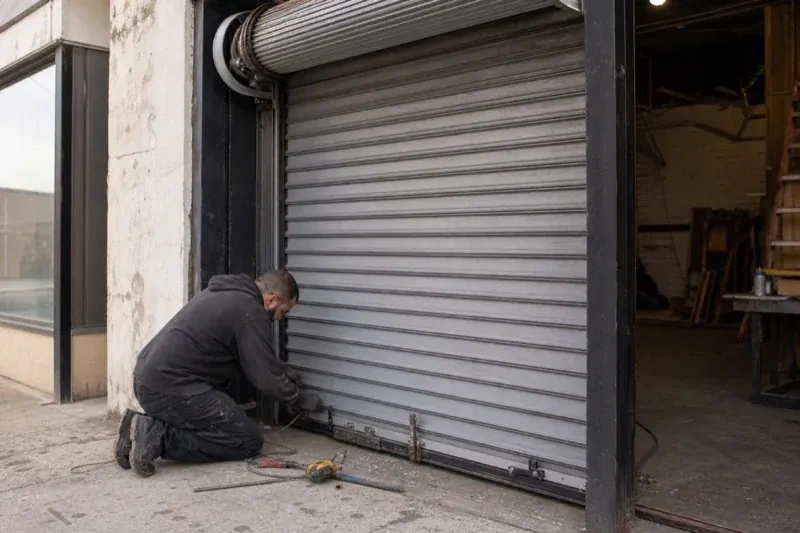
The rolling door starts upward, then one side rises ahead of the other. Its bottom bar sits on an angle, several slats scrape the guide, and the opening is no longer clear enough for normal shipping traffic.
Commercial Rolling Door Repair
In plain words
Impact damage often looks local but changes the path of the entire curtain. A bowed bottom bar can spread a guide, a bent slat can pull endlocks sideways, and a struck jamb can alter the opening width. Repair begins with measurements at the guides and brackets as well as a close look at the damaged section. Serviceable slats or curtain sections can be renewed, guides realigned and fasteners restored using components that match the identified assembly. The final check watches the repaired area enter the coil, pass through both guides and meet the sill evenly.
How the visit goesCold-weather moisture has frozen the bottom seal to the sill, and salty grit has collected along the guide entrances. The door chatters during its first cycle and leaves a visible gap after it reaches the closed limit.
Chemong Park
How the visit goes
Read the curtain from bottom to coil
The curtain reveals how the door has been travelling. The bottom bar is checked for level, twist, impact marks and even contact with the sill. Moving upward, the inspection follows interlocking slats or sheet material, endlocks and windlocks for dents, separation, missing fasteners, polished rub marks or sideways shift. At the hood, the technician observes how the material enters the coil and whether it stacks evenly on the barrel. These clues show whether a damaged section can be renewed locally or whether distortion has spread far enough to affect guides, brackets and counterbalance.
Renew damaged curtain sections
When damage is confined to serviceable slats or a section of sheet curtain, the affected material is brought to an accessible position and supported. Endlocks, windlocks or fasteners are removed in the sequence suited to that construction, the distorted pieces are separated, and compatible replacements are fitted with the correct orientation and spacing. Adjacent material is checked because impact can stretch joints beyond the obvious dent. The repaired curtain is guided through the opening by hand under control, confirming that the new section flexes into the coil and travels past the guide entrances without catching.
A square close and usable lock
The closed door meets the sill evenly, which lets the bottom seal, slide bolts and keepers do their jobs without staff pulling the curtain sideways. Locks are demonstrated only after alignment and limits have been settled, and any operator interlock is included in that demonstration. The person responsible for closing can see the sequence: bring the door fully down, confirm contact across the threshold and engage the intended hardware. Keeping the sill clear of pallet wrap, ice and loose debris helps preserve that result, while a lock that begins missing its keeper becomes an early alignment clue rather than a nightly struggle.
Commercial Rolling Door Repair
In the van
- Bearings and tension wheel
- Sensing edge and controls
- Curtain slats and endlocks
- Barrel and headplate brackets
- Counterbalance spring assembly
What affects the quote
Same fees day, night or weekend
1Access above the opening
Ceiling height, hood location, stored goods, mezzanines and nearby services affect safe reach to brackets, barrel and operator. Lifts, platforms and material-handling arrangements are planned accordingly.
2Bottom bar and sealing needs
A twisted bottom bar, torn astragal, worn retainer, sensing edge and misaligned slide bolts are distinct items. Floor slope and threshold condition also influence the closure-line work.
3Traffic-control requirements
Loading schedules, pedestrian routes, lift-truck lanes and access to both faces determine how the work zone is maintained. Facility support and alternate routing form part of the service plan.
Commercial Rolling Door Repair: questions
How should we prepare the loading area?
Move vehicles, pallets and loose packaging away from both faces of the opening, and identify an alternate route for staff and deliveries. Provide access to the control station, disconnect and any door records. A facility contact who understands normal operation and can authorise testing makes it easier to reproduce the complaint under controlled conditions.
Why does the door stop and reverse while closing?
A photoelectric beam may be blocked, a sensing edge may be active, the curtain may meet resistance, or the operator may be responding to a monitored-device or limit condition. The inspection keeps these possibilities separate. Sensor placement, alignment and response are checked alongside free mechanical travel and the operator's documented control logic.
Why is there a grinding or clattering sound near the hood?
Noise at the head can come from worn barrel bearings, loose brackets, misaligned drive chain or sprockets, shifting slats, an uneven coil or hardware contacting the hood. The pattern matters: once per revolution suggests something different from continuous guide scrape. Controlled observation locates the source before a specific part is selected.
Installation & Upgrades
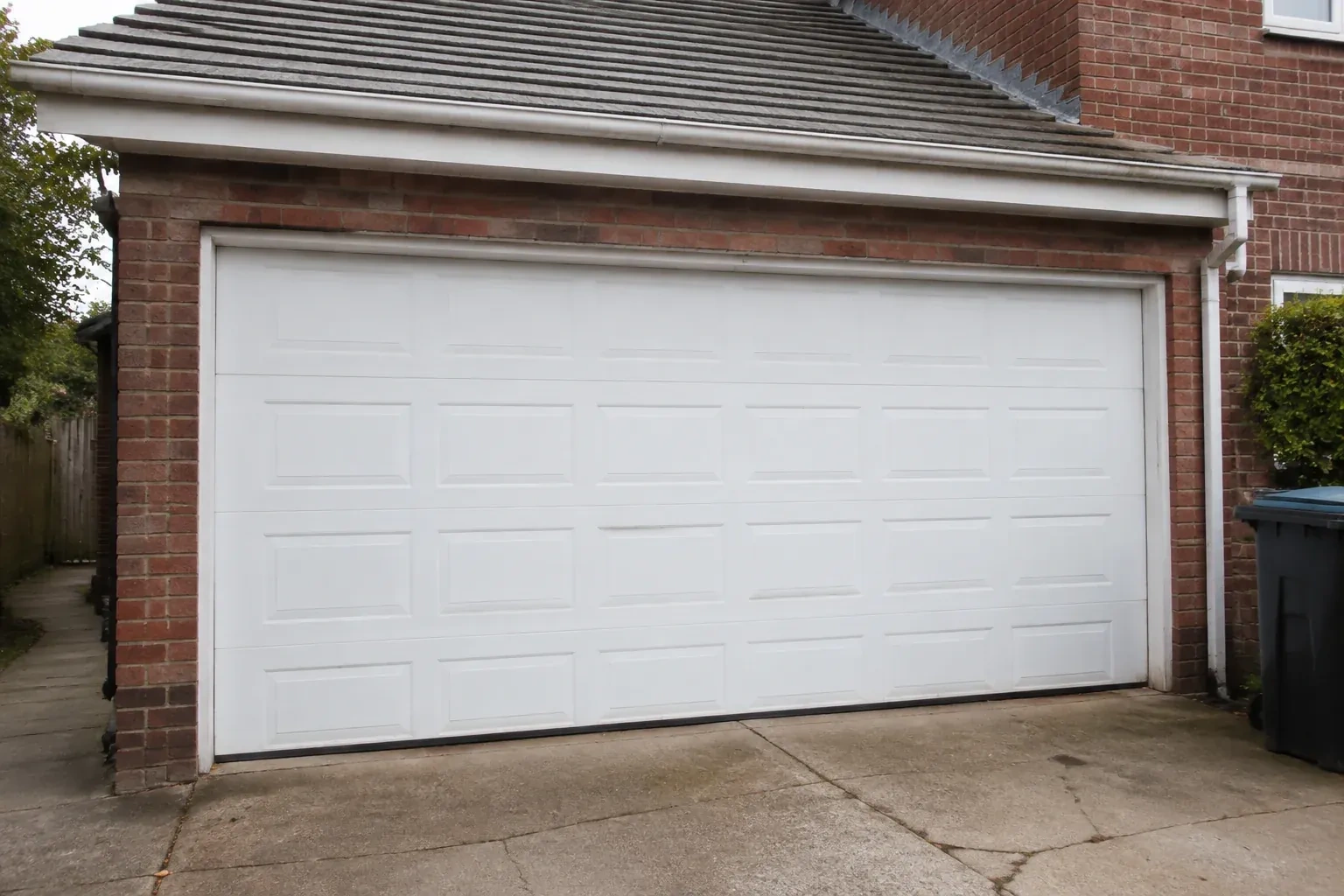
- Insulated Steel Garage Door InstallationSeveral sections are dented and the bottom edge has begun to rust.
- Wind-Rated Garage Door ReplacementThe current double door shudders when pressure changes outside, and daylight appears briefly along…
- Carriage-House Garage Door InstallationA front elevation update has brought new trim, lighting and a deeper colour palette, leaving the…
Commercial Rolling Door Repair near you
Every garage door service we offer in Chemong Park is described the same way: what you might have noticed, what the technician checks first, how the work is done and what you have afterwards. Start with the symptom you are seeing and the right service will be easy to find.