Openers · Trent River
Emergency Release Repair in Trent River
After a week of lifting the door by hand you pressed the button, hoping it would catch. Instead the motor grinds, the trolley thumps against the end of the rail, and the little lever that should snap back stays stubbornly upright.
Emergency Release Repair
In plain words
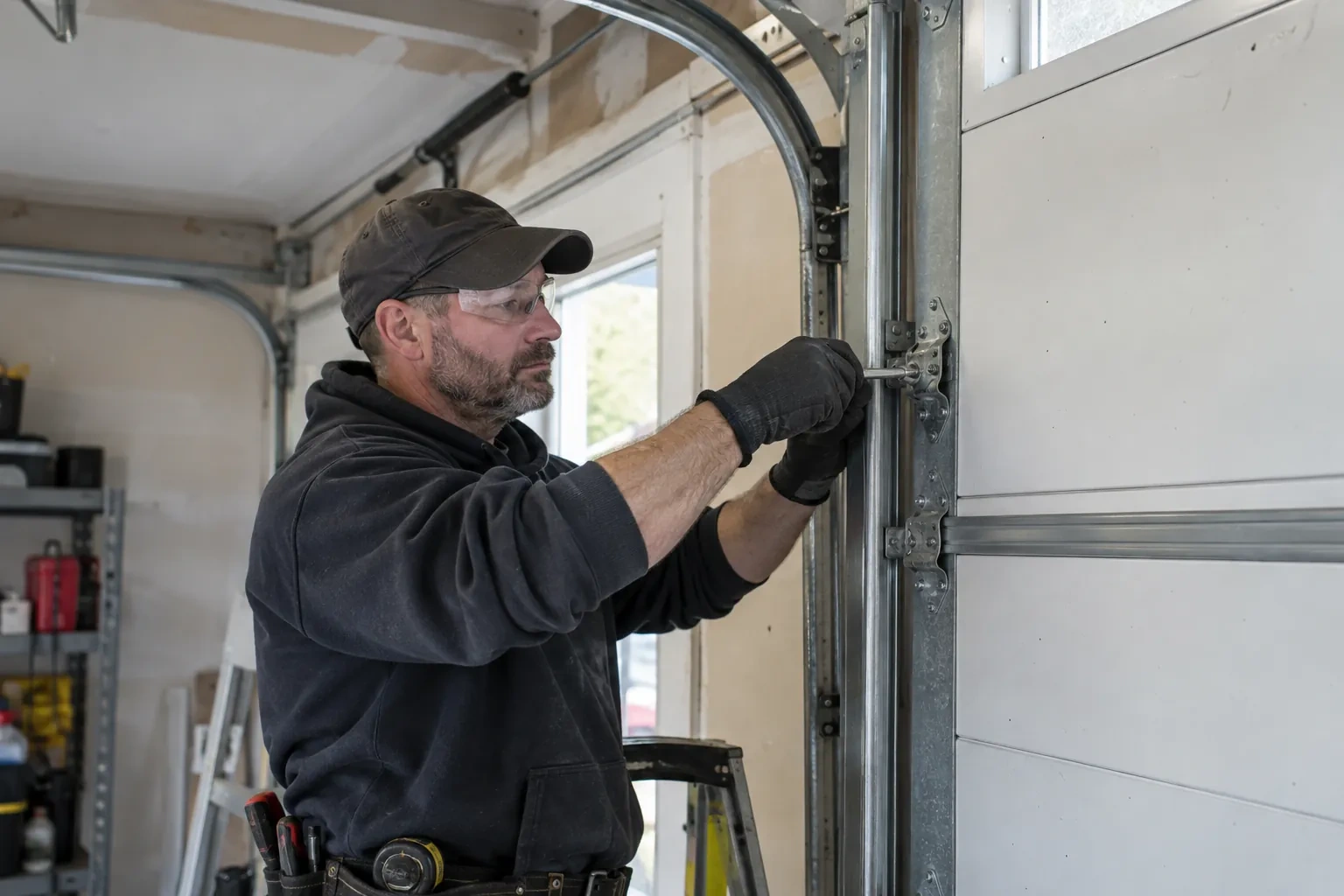
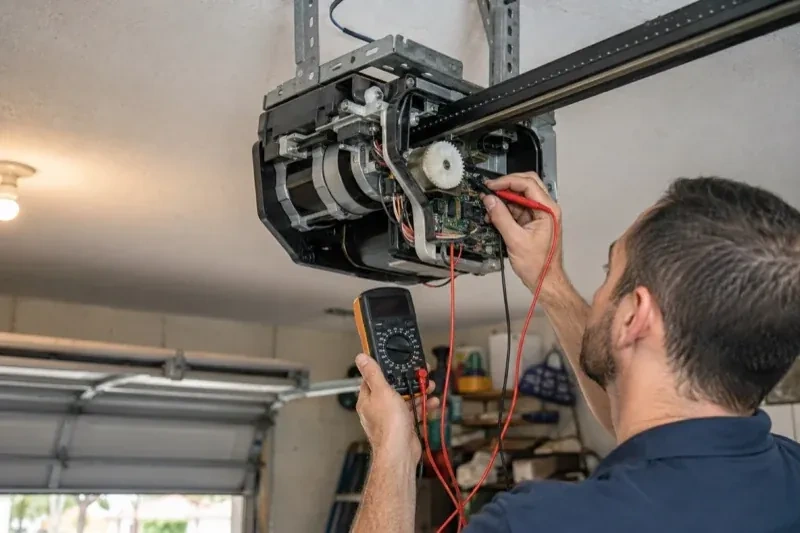
The visit runs in a fixed order. On the phone you describe what the release did, where the door was, and what kind of opener hangs from the ceiling. On site the door is closed or safely supported before anything else. The release assembly is inspected from handle to trolley, the door is disconnected and lifted by hand to check its balance, and the failed part is replaced with one that fits the model. The handle is set to the right height, the trolley is reconnected with the door closed, and the opener runs full cycles and both reversal tests. It ends with a demonstration on your own door.
How the visit goesThe power went out in the middle of an ice storm, the car is inside, and when you reach up for the red handle there is nothing there. A frayed stub of cord hangs from the trolley, well above your fingertips, and the door sits shut.
Trent River
How the visit goes
Who needs to use it, and how they get in
Finally the technician asks about the household and the building. Is there a side door or a door into the house, or is the overhead door the only way in? Who is likely to be pulling the handle in an outage: a tall adult, a teenager, an older relative? Does the family use the release often, or has it never been touched? Has a car roof been catching the cord? These answers shape the cord length, whether an outside key release is worth fitting, and how much of the visit goes to demonstration. The point is a release that works for the people who actually live there.
Reconnecting and proving the latch
Reconnection is done the way the maker describes for that unit. On most rails the cord is pulled toward the opener so the lever drops back to horizontal, then the opener is run and the trolley picks up the carriage with an audible click on the next cycle; on others the trolley re-latches when the door is lifted until it meets the carriage. The technician watches the join through a full open and close, then pulls the release and reconnects again to be sure the sequence repeats. You are shown what the click sounds like and what a trolley that has only half-latched looks like, so you can tell the two apart.
Through the winter
A release serviced in autumn is set up for the season the household is most likely to need it. The cord is rope that stays supple in the cold, the outside cylinder has been cleaned and lubricated, and the door has been proven to lift by hand with the bottom seal freed rather than frozen. Keep snow and ice cleared from the threshold so a manual lift is not working against a seal stuck to the slab, and keep the slide bolt or manual lock handy for nights when the door is in manual mode. A door that moves by hand is a door that gets you out.
Emergency Release Repair
In the van
- Dry lock lubricant and de-icer
- Rope and red handle kit
- Door arm, clevis pins and clips
- Outside key release kit (lock, cable, keys)
- Chain or belt tension hardware
What affects the quote
Same fees day, night or weekend
1Opener type and rail
A chain or belt unit on a one-piece rail, a sectional square rail, a screw drive and a wall-mounted opener each use a different release part, and the part sets the shape of the job.
2Extra keys and a lockbox
Two keys come with an outside release. Additional keys cut for family members, or a small lockbox for the spare, are small add-ons listed as separate lines.
3Travel and tension reset
Where the trolley was freed or swapped, the chain or belt is re-tensioned and the travel limits are reset, then the reversal tests repeated. That setup time is part of the job and shown as such.
Emergency Release Repair: questions
The outside release lock froze. How do I stop that happening again?
Salt spray and meltwater get into the keyway during a thaw and freeze overnight, the same way they do in a house lock. Keep the cylinder face clear of slush, give it a puff of dry lock lubricant before the cold sets in, and carry a small de-icer through the winter. A weather cap over the cylinder helps on a door that faces the road. The technician cleans and treats the cylinder as part of any outside release repair.
I pulled the release and the door was very heavy. Is the release broken?
The release did its job; the weight is the door telling you its springs are no longer carrying it. A balanced door lifts with modest effort and holds still at about a metre. A heavy one needs the counterbalance looked at, which is work with winding bars for a technician trained for tensioned hardware. During the visit the door side is corrected first, then the release is put back into use on a door that lifts as it should.
What exactly is the emergency release on a garage door opener?
It is the manual disconnect between the opener and the door: a red handle on a cord below the rail, connected to a lever on the trolley. Pull it and the trolley lets go of the door so you can move the door by hand, for instance during a power outage. Push the lever back, or run the opener, and the two reconnect. It is required on residential openers, coloured red so it stands out from everything else overhead.
Openers & Access
Emergency Release Repair near you
Garage doors in Trent River go through the same cycle: hardware wears, springs tire, openers age, and eventually the door itself is due. We offer a service for each stage, so you can maintain what you have, repair what has failed, or replace the door when that is the sensible choice.