New Doors · Peterborough
Commercial Sectional Door Repair
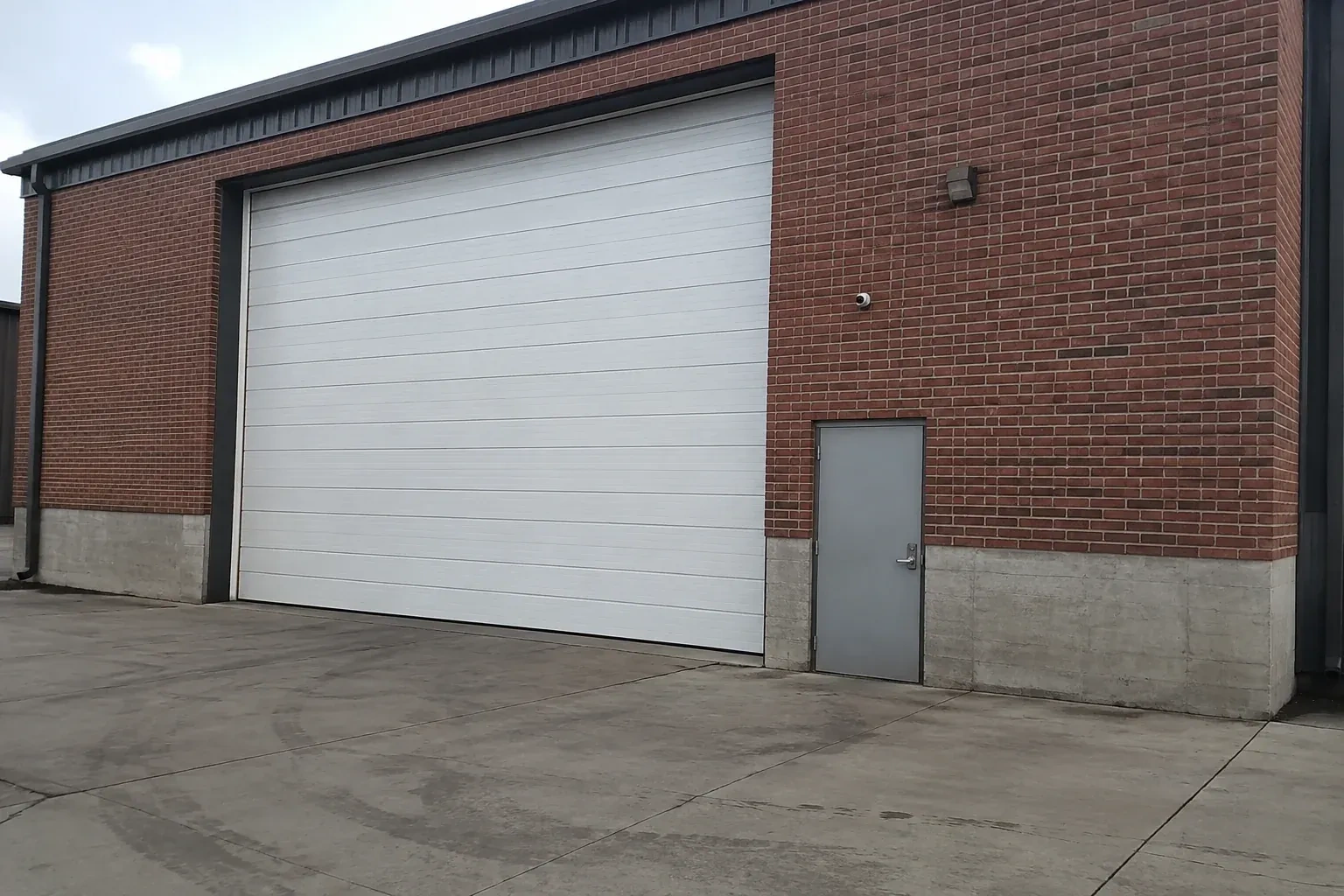
One busy service-bay door has become louder than the matching doors beside it. Its hinges show movement at the fasteners, several rollers have side play, and the operator vibrates through the supporting structure.
Commercial Sectional Door Repair
In plain words
A powered door works properly only when its mechanical assembly and operator agree. Repair may involve restoring smooth manual movement first, then checking the drive connection, limits, brake or clutch, control station and entrapment-protection devices. This order keeps an operator adjustment from masking a heavy, binding or unbalanced door. After the underlying hardware moves freely, travel settings are brought back to the actual open and closed positions, sensors are aligned, and the system is tested from each normal control point.
How the visit goesA high-lift door begins smoothly, then a cable loses tension as the top sections change direction. The loose cable no longer follows its drum grooves evenly, leaving the door unreliable at the top of travel.
Peterborough
How the visit goes
Following sound to its source
Noise is assessed by location, timing and character. A controlled cycle shows whether a knock occurs at a hinge, a roller entering the curved track, a bearing on the shaft or the operator drive. The technician watches for metal dust, polished rub marks, loose fasteners, roller play and track movement while listening. Door speed and vibration are compared through the vertical and horizontal portions of travel. This approach keeps several sounds from being treated as one problem and identifies the component producing each repeatable rattle, scrape or growl.
Correcting operator travel
Operator work follows the mechanical repair. The drive chain, sprockets, shaft connection, manual hoist, brake or clutch are inspected and adjusted according to the installed unit's instructions. Open and closed limits are set to the actual door positions without driving sections against stops or compressing seals excessively. Control wiring and stop functions are checked, followed by the photoelectric sensors or sensing edge supplied with the system. Several commanded cycles confirm consistent stopping, reversing and seating from the controls normally used by the facility.
Quieter hardware with a care routine
New rollers, hinges or bearings reduce play at the points that previously knocked or vibrated. Ongoing care means using the lubricant and interval stated for the installed door, applying it to moving pivots and bearings rather than coating the track. Tracks stay clean so rollers can travel on a firm surface without collecting grit. A simple note in the facility log describing the former sound and repaired location gives staff a reference. If a distinct noise returns at the same travel point, that observation makes follow-up assessment more focused.
Commercial Sectional Door Repair
In the van
- Torsion springs
- Commercial door sections
- Numbered end hinges
- Bottom seal and retainer
- Vertical and horizontal track
What affects the quote
Same fees day, night or weekend
1Protective device condition
Misaligned photoelectric sensors may need adjustment, while damaged wiring, sensing edges, brackets or control modules require compatible components and additional function testing.
2Lift and track configuration
Standard, low-headroom, high-lift and vertical-lift arrangements use different track geometry, drums, cables and access methods, so the installed configuration shapes labour and parts.
3Operator repair requirements
Drive chains, sprockets, shaft couplings, hoists, brakes, clutches, limits and control wiring each add distinct mechanical or electrical tasks to the quote.
Commercial Sectional Door Repair: questions
How does high-lift track change the repair?
High-lift doors keep travelling vertically above the opening before turning into horizontal track. That geometry changes cable length, drum type, track support and operator arrangement. Repairs therefore use the recorded lift dimensions and door weight, with cable tension observed through the transition and near the open position. Components from a standard-lift setup are not assumed to match.
Can the opening stay in use while work is underway?
The repair area needs controlled access while the door is supported, tensioned components are handled and operational tests are performed. Facilities can redirect pedestrians, forklifts and vehicles to another route and keep stored goods clear of the tracks and threshold. Once tools and supports are removed, the technician completes the agreed tests before returning the bay to normal traffic.
Why does the door reverse near the floor?
A reversal can start with a blocked or misaligned photoelectric sensor, a distorted sensing edge, resistance in the track, an incorrect close limit or a control-circuit issue. Inspection covers the clear opening, sensor alignment and wiring, bottom edge and mechanical travel. The source is corrected first, then the protective response is tested through several complete cycles.
Installation & Upgrades
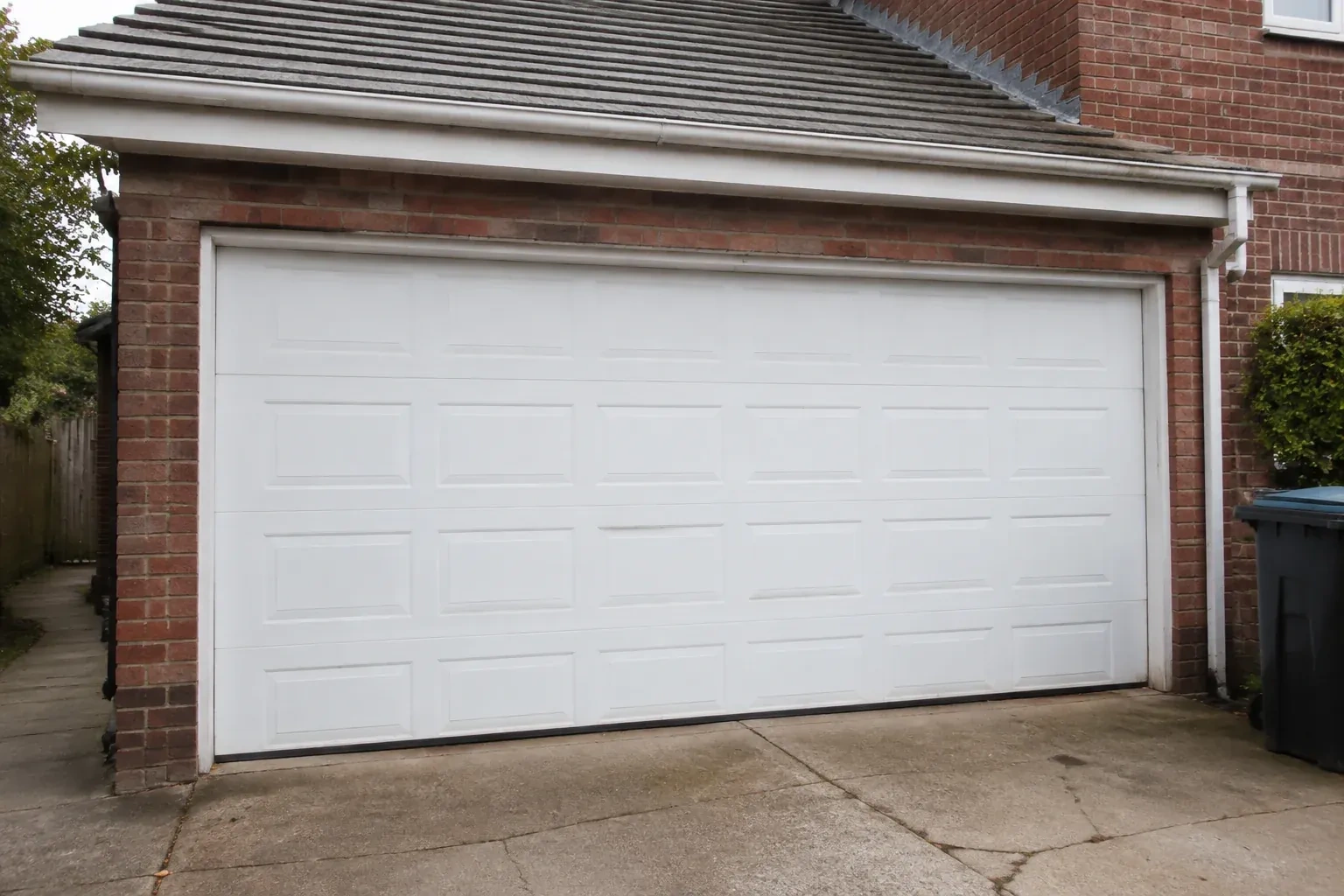
- Insulated Steel Garage Door InstallationSeveral sections are dented and the bottom edge has begun to rust.
- Wind-Rated Garage Door ReplacementThe current double door shudders when pressure changes outside, and daylight appears briefly along…
- Carriage-House Garage Door InstallationA front elevation update has brought new trim, lighting and a deeper colour palette, leaving the…
Commercial Sectional Door Repair near you
Shops, warehouses and service bays in Peterborough have their own list: rolling steel doors, heavy sectional doors, industrial operators, safety edges and high-cycle springs. Alongside our residential work, we service and replace all of these and can set up a maintenance schedule that fits your operating hours.