Springs · Village Meadows
Garage Door Balance Adjustment in Village Meadows
The door has grown heavy so gradually you stopped noticing, until a visitor tried to lift it and could not. The opener still manages, but it sounds strained, the chain slaps on the way up, and the wall button gets pressed twice most mornings.
Garage Door Balance Adjustment
In plain words
What you get back is a door that lifts with light, even effort and a written note of how it was set. It holds still at knee height, at waist height and fully open, closes onto the floor gently along its whole length, and rises without twisting. The opener sounds relaxed because it is steering rather than lifting, and it reverses cleanly when the safety tests are run. The technician tells you how many turns the springs carry, whether any parts are nearing the end of their life, and how to repeat the hand test yourself each season so you notice any drift early.
How the visit goesThe opener has started to groan on the way up. The door climbs slowly, hesitates near the top, and on the way down it sometimes stops a hand's width above the floor and reverses, as if something were in the way when nothing is.
Village Meadows
How the visit goes
Inspecting the springs before any turns are added
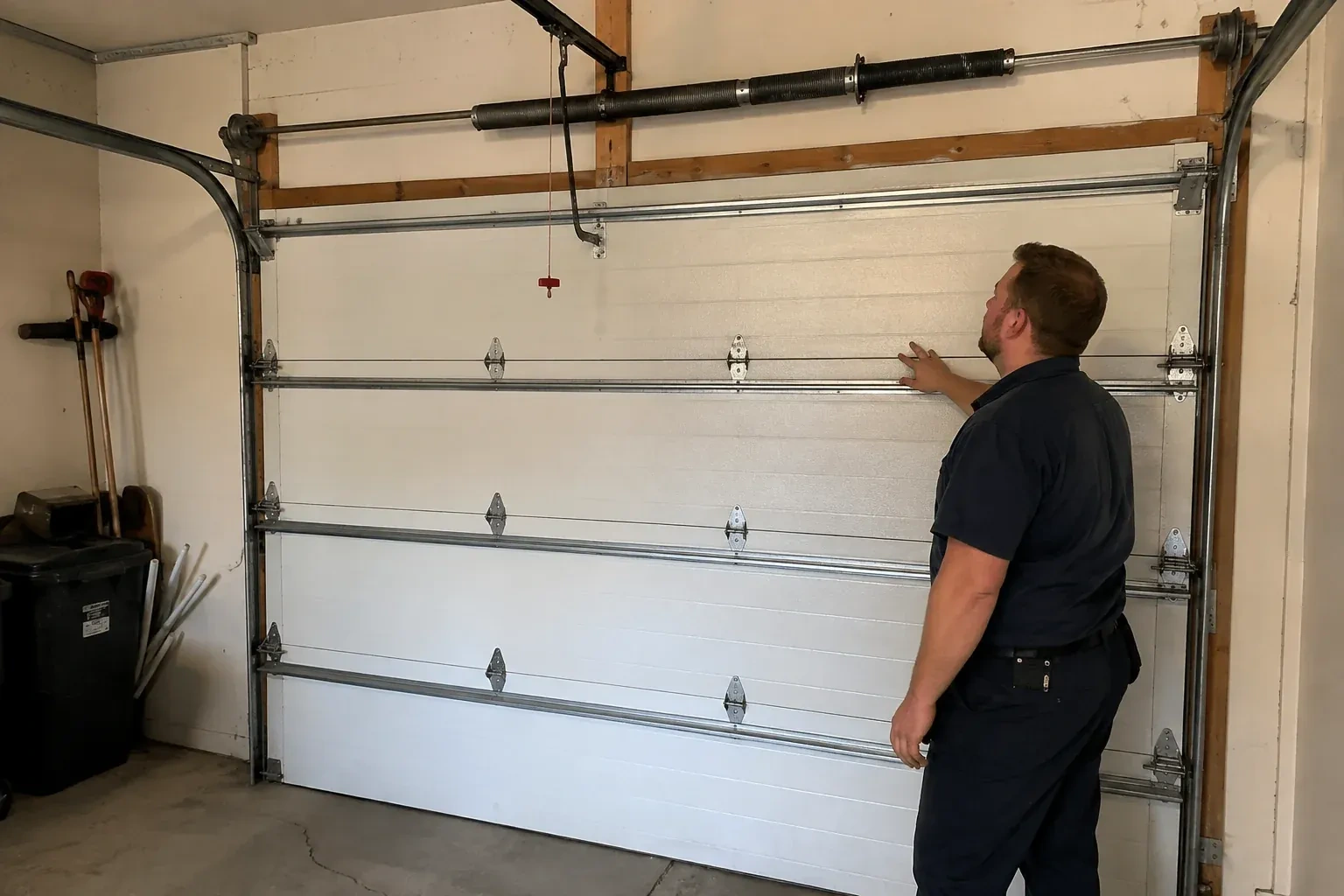
Adjustment only makes sense on a spring that is sound, so each one is examined closely. On a torsion system the technician looks for a gap in the coil, rust pitting, uneven coil spacing and a cone that has slipped on the shaft, and measures the wire size, inside diameter and length to confirm the spring suits the door's weight. On extension springs the check is for stretched or opened coils, a broken end loop and the presence of a containment cable. A spring that has simply lost a little tension can be wound up; one that is undersized or near the end of its cycle life is explained and offered as a replacement instead.
Removing the friction that made the door feel heavy
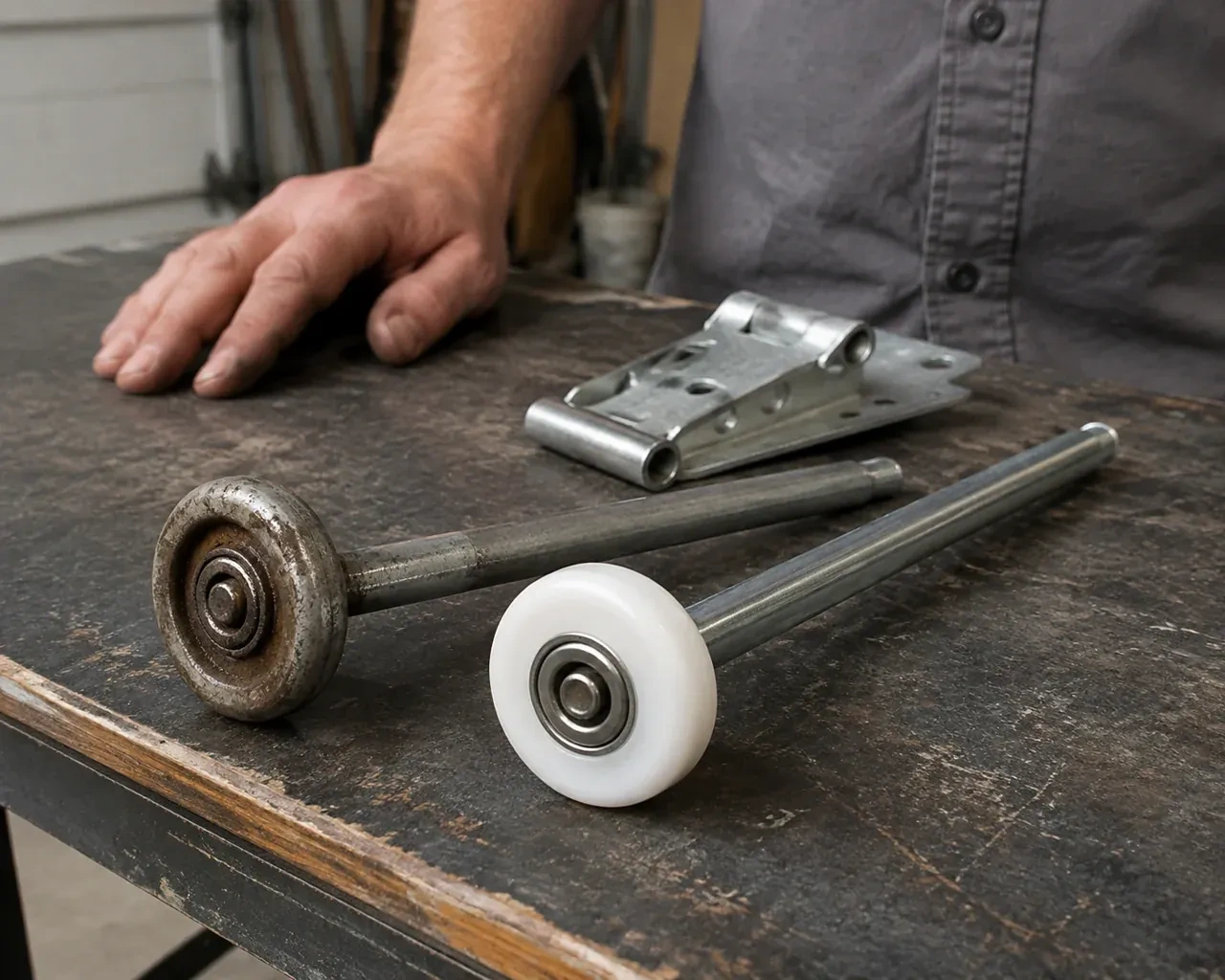
Where the inspection found drag, it is dealt with before the springs are judged. Seized or worn rollers are swapped for new ones, one hinge at a time so the door never leaves its track. Track sections knocked out of line are eased back plumb and their brackets tightened to the jamb; a dent is dressed out or the section replaced. Hinges with play are replaced and their screws driven into sound material. The springs, hinge pins, roller stems and bearings then receive a light coat of garage-door lubricant. After this the door is lifted again, and it is common for the heaviness to be largely gone before any turns are added.
A record of the setting
Before leaving, the technician tells you how the door was set: the number of turns on each torsion spring or the hook position on each extension spring, the spring dimensions, the door's measured weight if it was weighed, and any parts that were replaced. Writing this on a card by the opener or inside the manual saves a future technician from starting from scratch, and it gives a reference point if the door ever starts to drift. Springs age gradually, so a note that says the door held at a certain number of turns tells a later visit how far things have moved.
Garage Door Balance Adjustment
In the van
- Lift cables
- Extension springs and S-hooks
- Track clamps or locking pliers
- Garage-door lubricant
- Nylon or steel rollers
What affects the quote
Same fees day, night or weekend
1Condition of cables and drums
Cables that are fraying or drums with worn grooves found during the check are recommended for replacement while the system is being set, and quoted as their own items.
2Door out of level
A door with one corner high needs its cables reset on the drums before the tension is set, which adds a step to the visit and is listed as its own item.
3Extension-spring containment and pulleys
On an extension door, a missing containment cable is added and worn pulleys are replaced with the adjustment. Each is a small parts line on the quote.
Garage Door Balance Adjustment: questions
Can a door with a broken spring be balanced?
A broken spring is replaced rather than adjusted; there is nothing left to wind. On a two-spring door the technician normally replaces both, since the survivor has the same age and cycle count, and then balances the door on the new pair. Until the visit, leave the door closed and avoid running the opener, which is not designed to lift the door's full weight on its own.
What is the red cord hanging from the opener for?
It is the manual release. Pulling it disconnects the door from the opener's trolley so the door can be moved by hand, which is how the balance test is done and how you get the car out during a power cut. The industry standard calls for it to be red and reachable, no more than about six feet above the floor. Reconnecting is usually as simple as running the opener once.
What does it mean for a garage door to be balanced?
It means the springs carry nearly all of the door's weight, so the door itself feels close to weightless. Balanced, it will stay put at any partly open position when moved by hand, stay fully open on its own, and close without slamming. The opener then only has to guide the door rather than lift it, which is how it was designed to work.
Springs & Hardware
- Garage Door Hinge ReplacementWatching from inside as the door opens, you can see the gap between the second and third panels…
- Garage Door Track Repair or ReplacementThe door has started rubbing the frame on the left, leaving a shiny stripe down the weatherstrip.
- Garage Door Cable ReplacementYour older door has springs along the tracks, and one cable has slipped off its pulley and dangles…
Garage Door Balance Adjustment near you
Our technicians arrive in Village Meadows ready for the everyday repairs: torsion and extension springs, lifting cables and drums, rollers, hinges, bottom seals, photo-eyes and opener gears. For bigger decisions, such as a new insulated door or a modern opener, we measure, advise and install as a separate service.