New Doors · Chemong Heights
High-Lift Garage Door Conversion in Chemong Heights
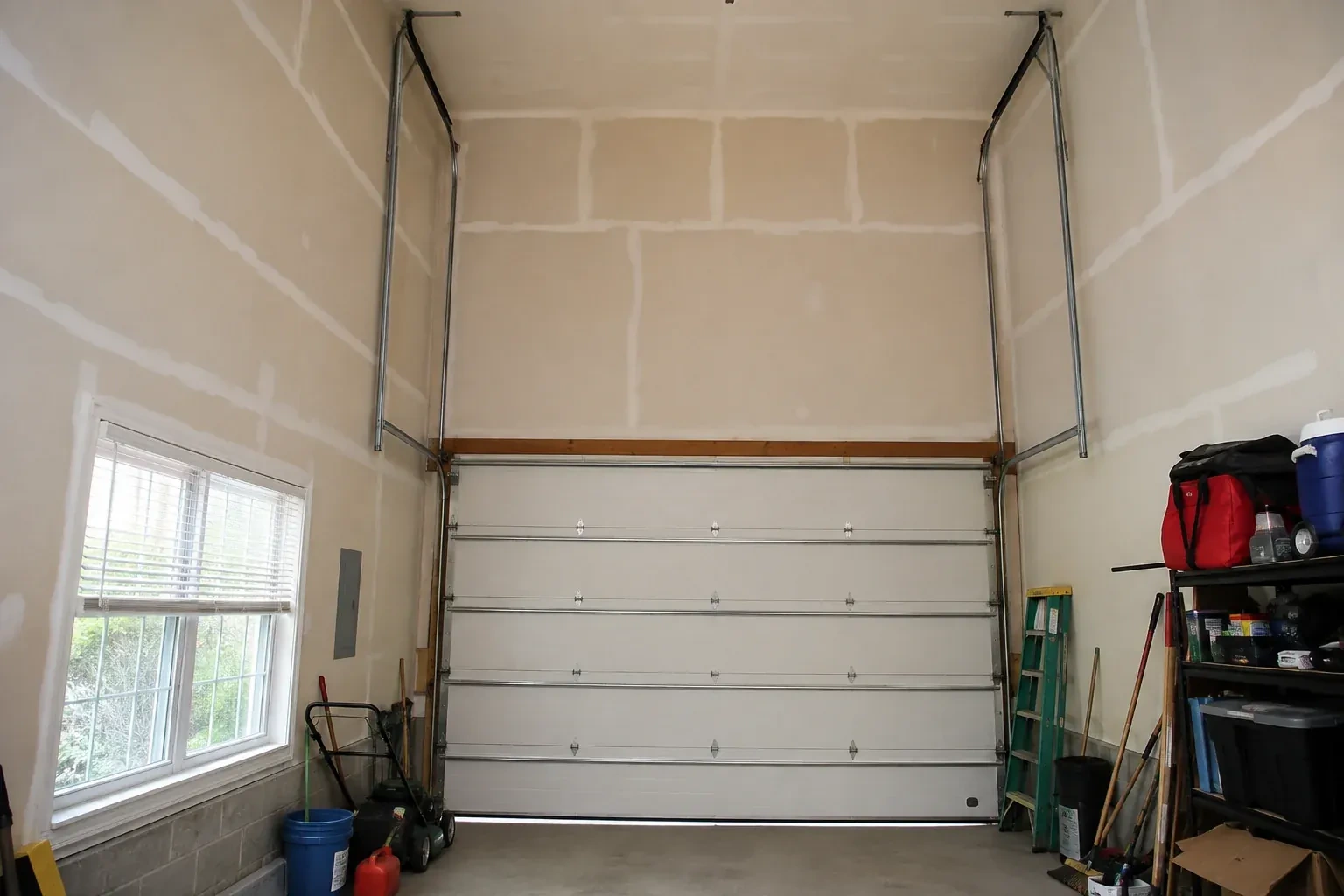
A taller van clears the closed opening comfortably, then loses useful space when the door is raised because the bottom section hangs below the ceiling. The issue is the open position rather than the doorway height.
High-Lift Garage Door Conversion
In plain words
This conversion is a measured redesign of an existing sectional-door system. It begins by identifying the door, weighing or confirming its weight, inspecting the sections and locating sound support points. A layout is then developed for the extra vertical rise, shaft position and horizontal track. Components are selected for that geometry and installed as a matched set. Manual balance, cable tracking, roller movement and powered safety functions are checked before handover, leaving a documented arrangement that future service can understand.
How the visit goesWorkshop equipment is moving in, and the present opener rail and door sections occupy the same overhead zone planned for lighting and clear working space. A different travel path could organize that ceiling area more effectively.
Chemong Heights
How the visit goes
Identify and assess the existing door
The door itself is documented before reuse is discussed. Its width, height, construction, section thickness, reinforcement and actual weight influence every counterbalance choice. Hinges, rollers, end stiles and top fixtures are checked for condition and suitability through a higher transition. Labels or original paperwork can help identify the system, while field measurements confirm what is installed now. This review establishes which door components remain useful and which related hardware belongs in the conversion scope, giving the new layout a dependable starting point.
Secure the door before changing its geometry
Conversion begins with the door closed, the work area organized and the panels firmly supported. The operator is disconnected from door movement, and the spring system is released through controlled professional procedures. Clamps and lifting equipment keep the door from shifting while loaded components are removed. This deliberate setup gives technicians stable access to tracks, cables, drums and shaft hardware. It also protects the reusable sections and creates a known starting condition for building the new path rather than dismantling parts around an unsupported door.
A balanced door you can understand
You receive a demonstration of powered operation and the intended manual-release function. With the operator disengaged under the proper conditions, the converted door should feel controlled rather than depending on the motor to overcome its weight. The technician explains what normal movement sounds and looks like, including even cables and a level bottom edge. Knowing that baseline makes future changes easier to notice. The opener is then re-engaged, and its limits and applicable protective functions are shown during a complete closing and opening cycle.
High-Lift Garage Door Conversion
In the van
- Torsion shaft
- End bearing plates
- Matched lift cables
- Transition track sections
- Braced back hangs
What affects the quote
Same fees day, night or weekend
1Available headroom and backroom
Wall height above the header and clear ceiling depth shape the feasible high-lift dimension, transition location and final horizontal storage run.
2Condition of reusable sections
Sound panels and hardware may remain in service, while worn hinges, rollers, top fixtures or damaged reinforcement add related work to the conversion.
3Framing and attachment readiness
Clear, suitable support points simplify installation; missing blocking, concealed conditions or structural questions create preparatory work and coordination outside the basic hardware change.
High-Lift Garage Door Conversion: questions
How is the door tested after conversion?
Testing starts with controlled manual travel. Technicians observe balance at several positions, level movement, roller engagement, cable seating, clearances and transition through the curves. After the mechanical system performs properly, powered cycles verify open and closed limits, operator behaviour, emergency release and applicable protective functions. Fasteners, supports and component records receive a final review before demonstration.
What records should I receive after the work?
Keep a record of the high-lift dimension, final open-door clearance, track arrangement, drums, cables, spring specification, shaft parts and operator configuration. Component labels, manuals, layout notes and completed test results are also useful. These details help future service and allow other garage projects to respect the door's movement, attachment and access requirements.
How much ceiling height does the conversion need?
There is no single ceiling figure because the useful dimension depends on the opening height, desired clearance, track transition, shaft and spring space, opener arrangement and nearby obstructions. A technician measures the whole bay and calculates the high-lift rise that fits those boundaries. The result should be expressed as a proposed open-door clearance before the component set is ordered.
Installation & Upgrades
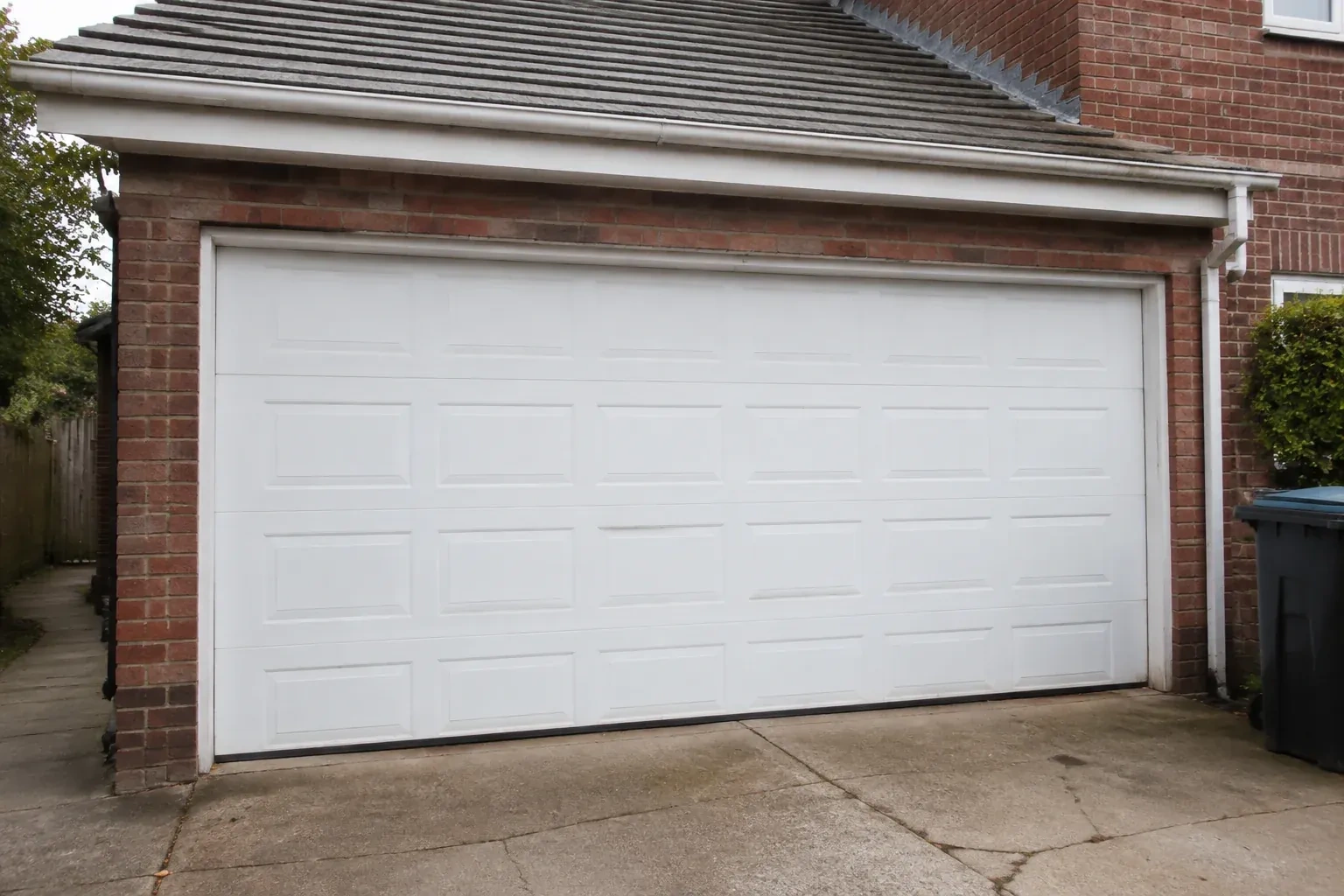
- Insulated Steel Garage Door InstallationSeveral sections are dented and the bottom edge has begun to rust.
- Wind-Rated Garage Door ReplacementThe current double door shudders when pressure changes outside, and daylight appears briefly along…
- Carriage-House Garage Door InstallationA front elevation update has brought new trim, lighting and a deeper colour palette, leaving the…
High-Lift Garage Door Conversion near you
Residential and commercial customers in Chemong Heights come to us for spring and cable replacement, off-track resets, opener diagnosis and replacement, remote and keypad programming, weatherstrip and seal work, balance adjustments, panel repair and new door installation. Each service is explained on its own page in plain language.