New Doors · Warsaw
Commercial Sectional Door Repair in Warsaw
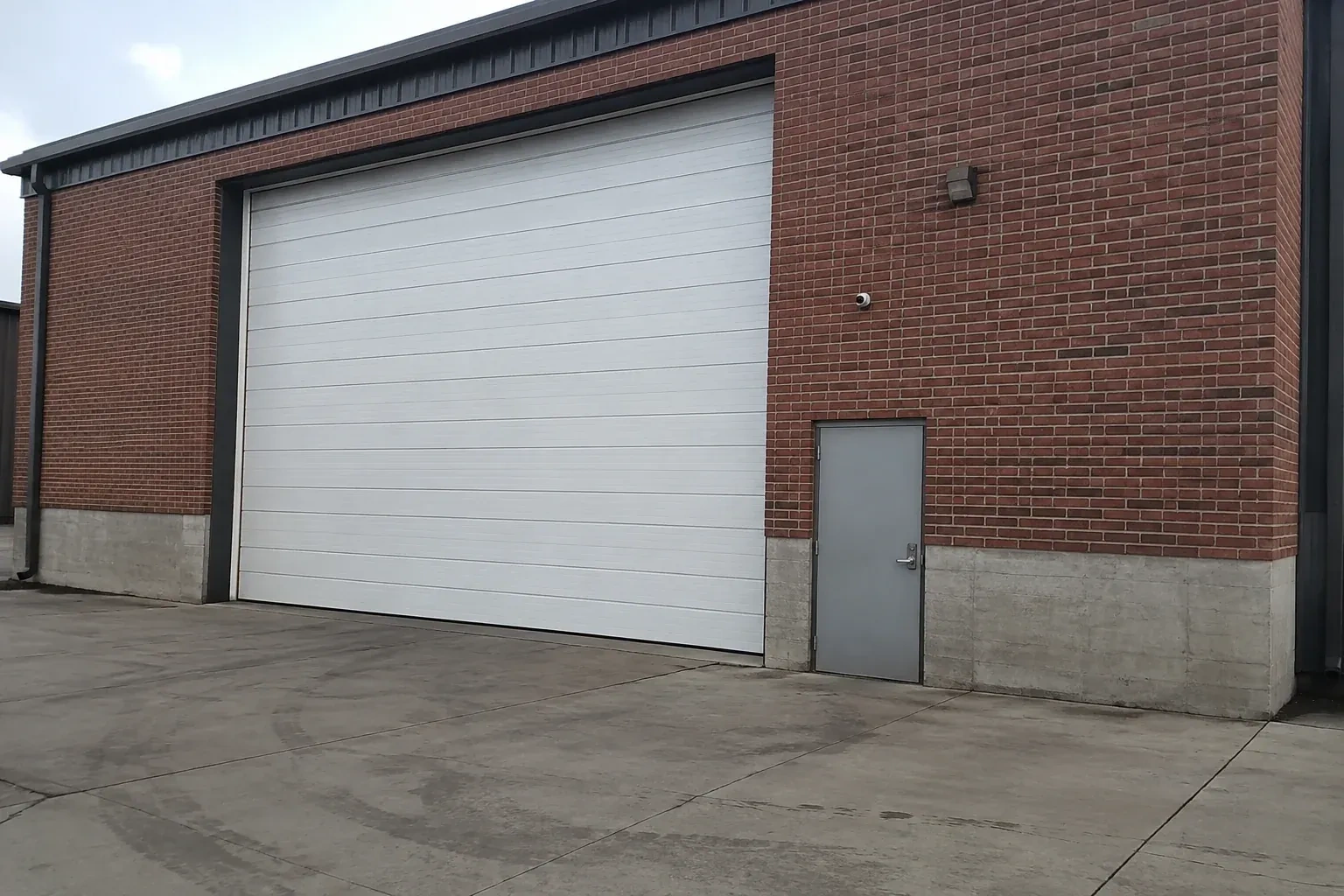
One busy service-bay door has become louder than the matching doors beside it. Its hinges show movement at the fasteners, several rollers have side play, and the operator vibrates through the supporting structure.
Commercial Sectional Door Repair
In plain words
When a bay door hangs crooked, the visible angle is often only the starting clue. A technician compares cable tension on both sides, checks how each cable sits on its drum, examines bottom fixtures and looks for a shifted track or damaged roller. The door is supported before tensioned parts are handled. Once the cause is corrected, the cables are seated, the door is levelled and balance is checked through travel. Powered limits and protective devices are tested afterwards, because the operator depends on a mechanically sound door.
How the visit goesA high-lift door begins smoothly, then a cable loses tension as the top sections change direction. The loose cable no longer follows its drum grooves evenly, leaving the door unreliable at the top of travel.
Warsaw
How the visit goes
Checking balance before the operator
When the motor hums, stalls or strains, the door itself is assessed before settings are changed. With the system safely placed for manual evaluation, the technician checks whether the door moves freely and remains controlled through its range. Spring condition, cable wraps, rollers, track obstructions and any active lock are reviewed. Only after the mechanical load is understood does attention move to the drive chain, sprockets, clutch or brake, travel limits and controls. This sequence separates an operator issue from resistance created elsewhere in the assembly.
Replacing an impact-damaged section
The affected section is supported while hinges, rollers and connected hardware are transferred or renewed. The replacement is matched for thickness, construction, profile and required reinforcement so it fits the neighbouring sections and carries the same hardware pattern. Bent end stiles or struts are addressed as part of the section assembly. Rollers are returned to the correct hinge positions, section joints are aligned and fasteners are set securely. Track clearance is then checked through the curve so the new panel travels without rubbing or opening gaps.
Operator settings matched to the door
Once limits and controls are set, the powered system should stop at a useful open height, close onto the floor without excessive pressure and respond consistently to its protective devices. Staff can keep photoelectric lenses clean, avoid moving their brackets and include the sensing edge in routine operational checks. The manual hoist or release instructions remain near the control station for designated personnel. Any later mechanical repair should be followed by another operator review, because door weight, balance and travel position all influence powered operation.
Commercial Sectional Door Repair
In the van
- Torsion springs
- Commercial door sections
- Numbered end hinges
- Bottom seal and retainer
- Vertical and horizontal track
What affects the quote
Same fees day, night or weekend
1Parts identification and compatibility
Clear model data and current component markings simplify matching; altered assemblies or unavailable profiles may require additional measurement and an engineered compatible approach.
2Roller and hinge wear
One failed roller is a smaller scope than widespread bearing play, loose numbered hinges or damaged mounting holes across several door sections.
3Extent of impact transfer
A dent confined to one section differs from force that also bent an end stile, roller, guide rail, jamb bracket or supporting anchor.
Commercial Sectional Door Repair: questions
How does high-lift track change the repair?
High-lift doors keep travelling vertically above the opening before turning into horizontal track. That geometry changes cable length, drum type, track support and operator arrangement. Repairs therefore use the recorded lift dimensions and door weight, with cable tension observed through the transition and near the open position. Components from a standard-lift setup are not assumed to match.
Can the opening stay in use while work is underway?
The repair area needs controlled access while the door is supported, tensioned components are handled and operational tests are performed. Facilities can redirect pedestrians, forklifts and vehicles to another route and keep stored goods clear of the tracks and threshold. Once tools and supports are removed, the technician completes the agreed tests before returning the bay to normal traffic.
Why does the door reverse near the floor?
A reversal can start with a blocked or misaligned photoelectric sensor, a distorted sensing edge, resistance in the track, an incorrect close limit or a control-circuit issue. Inspection covers the clear opening, sensor alignment and wiring, bottom edge and mechanical travel. The source is corrected first, then the protective response is tested through several complete cycles.
Installation & Upgrades
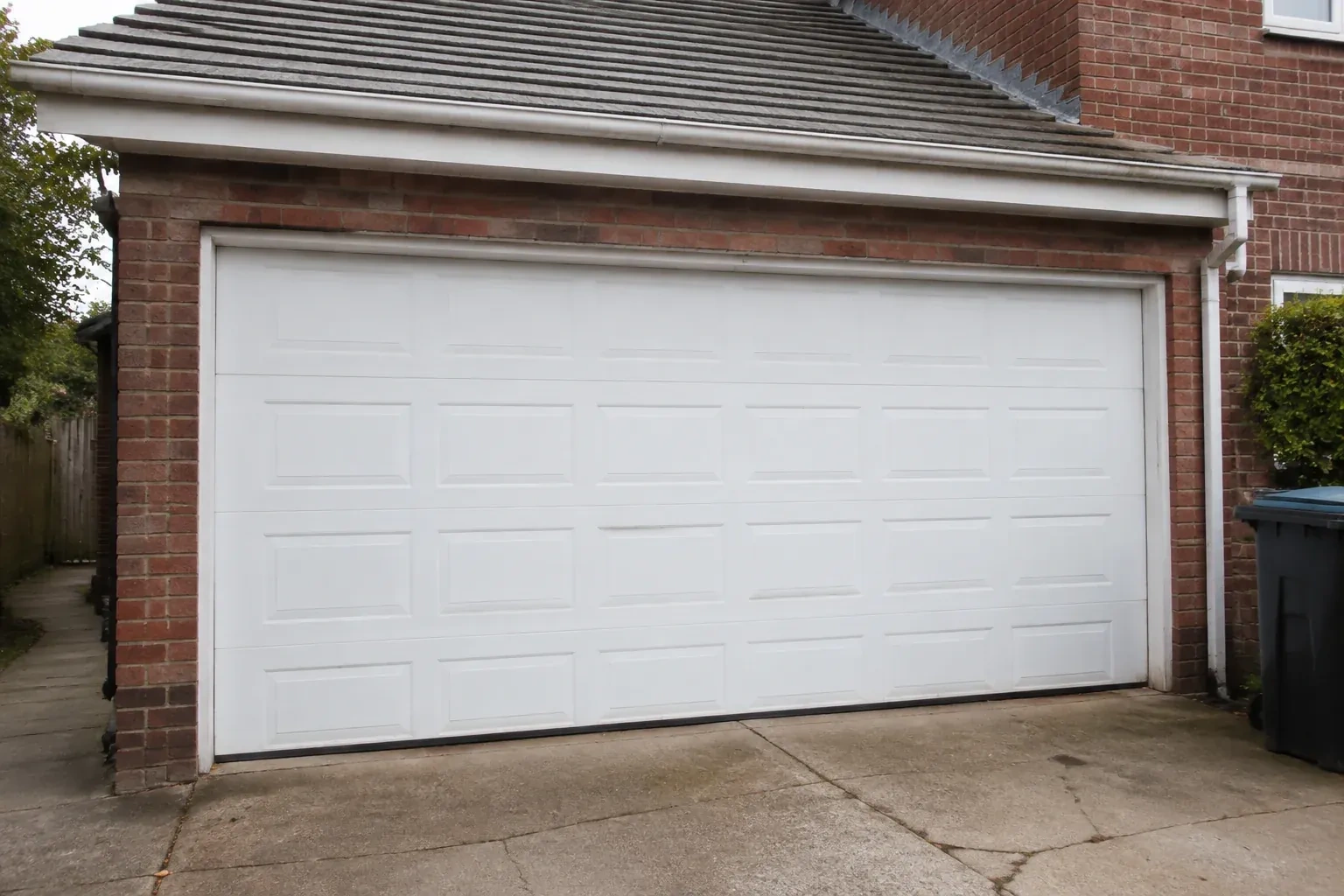
- Insulated Steel Garage Door InstallationSeveral sections are dented and the bottom edge has begun to rust.
- Wind-Rated Garage Door ReplacementThe current double door shudders when pressure changes outside, and daylight appears briefly along…
- Carriage-House Garage Door InstallationA front elevation update has brought new trim, lighting and a deeper colour palette, leaving the…
Commercial Sectional Door Repair near you
We think of garage door work in Warsaw as keeping a heavy moving object safe and smooth. That covers spring and cable work, tracks and rollers, opener force and sensor settings, seals against the weather, and complete door replacement when a repair no longer makes sense.